

 Shopify blog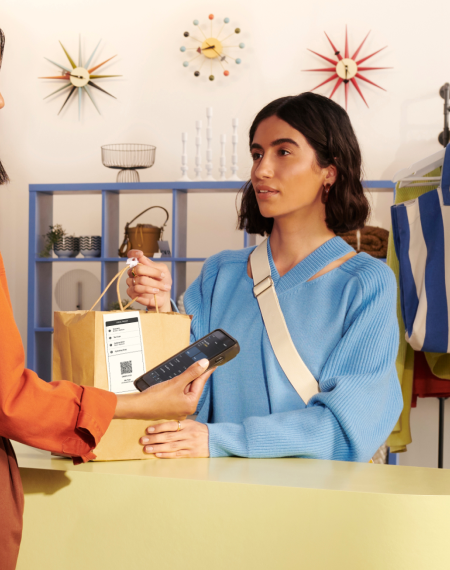

Selling across multiple channels is how shoppers buy now. Salsify’s 2025 Consumer Research found that 30% of shoppers purchased on a smartphone while standing in a physical store, underscoring how fluid the online-to-store handoff has become.
Omnichannel execution involves designing a single journey across many touchpoints. This means consistent pricing and product data everywhere, real-time inventory transparency, and flexible fulfillment options like BOPIS and curbside pickup.
When every channel shares the same source of truth, customers can start on social media, finish in-store, and get support without ever repeating themselves.
Ahead, you’ll learn how to create cohesive online and offline strategies that build loyalty and reduce service costs.
Online vs. offline: key differences
Online shopping is built for speed and convenience. Physical stores are historically known for building trust and making human connections.
A unified commerce strategy doesn’t make customers choose one or the other—it connects both worlds for the move from device to sales floor feels seamless.
Here are some differences between an offline and online shopping experience:
- Discovery. Online, customers browse endless aisles via search and social media. In-store, they rely on visual merchandising and expert staff to guide them.
- Decision making process. Digital shoppers review and view photos to build confidence. In-store shoppers want to touch, try on, or test the product before buying.
- Fulfillment. Online value lies in offering different shipping options. In-store offers immediate ownership—customers walk out with the item or use curbside pickup.
- Returns. Online returns force retailers to pay for shipping and manual inspections as products sit as dead stock. In-store returns are faster and give associates a chance to resolve the issue and retain the customer’s loyalty.
- Service. Online support is usually self-service or chat-based. In-store service lets you build customer relationships. No matter where it starts, the customer expects the conversation to continue across all platforms.
Keep in mind, your customers aren’t thinking in terms of channels, they’re simply trying to get things done. These handoffs between digital and physical spaces are where you either win or lose a customer.
Take Monos, a digital-native luggage brand that expanded into retail without splintering the experience. Since adopting Shopify POS, Monos reported 40% year-ober-year (YoY) revenue growth in regions with physical store presence and reduced POS training time to a half day.
With unified customer profiles across online and in-store channels, teams can maintain consistent service and spend more time helping customers rather than navigating disconnected systems.
Defining the experience
If you want to create a seamless experience for your customers, you first have to decide exactly what that experience should feel like.
It all starts with your brand’s identity. Who you are, who you’re helping, and the promises you make. Whether you build this identity yourself or hire an agency, the result needs to be practical enough to guide your everyday choices, from the way you write emails to the way you handle returns.
Once you’ve nailed down your identity, think about your ideal customer. What job are they really hiring you to do? There might be a gap between who is buying from you now and who you want to reach, so get specific about what actually motivates them. This is how you design touchpoints that feel intentional rather than just a series of random interactions.
TakeThe Giving Manger, for example. It built its entire brand around one seasonal product and one goal: helping families start a holiday tradition. You see the same heart everywhere. In its social posts, on its website, and even in the retail stores it partners with. Everything feels intimate and family-friendly.
When things feel inconsistent, trust starts to fade. Broadridge recently noted that 71% of consumers feel most companies still have a long way to go when it comes to customer experience.
But when you’re reliable across every channel, you take the friction out of the process. You make it easy for happy customers to keep coming back, and even easier for them to tell their friends why they should, too.
Putting your customers first
When creating your customer experience, put the customer first and design it as one seamless journey across online and offline touchpoints.
Put yourself in the customer’s shoes: What are they doing, thinking, and feeling as they switch between touchpoints like scrolling on mobile, comparing on desktop, asking a question in-store, or trying to resolve an issue after purchase? Customer experience breaks often happen in the handoffs (e.g., the store can’t see an online order, policies differ by channel, or a customer has to repeat themselves).
How can you get inside your customers’ heads? Do your homework. Learn about your target audience and learn how they navigate across channels, not just within one.
Here are a few ways to understand what they want so you can put them first:
- Focus groups. Gather a group of people that fall within your target audience to ask questions about their needs, viable solutions, and what drives confidence at each touchpoint.
- Market research. What other products or brands exist that serve your target customers—and where do they create friction when customers move between online and offline channels? This can reveal gaps you can win with better product, marketing, pricing, and/or brand positioning.
- Buyer personas. Create fictionalized characters that epitomize your ideal customers, including their preferred channels and handoff moments (e.g., research on mobile → buy on desktop → pickup in-store).
- Journey mapping. Map the end-to-end path—from discovery to post-purchase—so you can design consistency where it matters most (information, inventory, fulfillment, and support), reflecting the cross-touchpoint flexibility shoppers now expect.
Online and offline sales channels to consider
The number of touchpoints has continued to grow as shoppers add messaging, social commerce, and new fulfillment options to their journeys.
But realistically, retailers can’t be everywhere at once. So, here are some of the top sales channels to consider when creating your multichannel sales strategy.
Website
The rise of ecommerce is a well-known trend to most retailers. In Q3 2025, US retail ecommerce sales were $310.3 billion and accounted for 16.4% of total retail sales, according to the US Census Bureau.
And during the 2025 holiday season, online sales grew 7.4% while in-store sales grew 2.9%, according to Mastercard SpendingPulse.
Here’s what to consider on your website:
- Imagery. Does it match your brand aesthetic? Does it represent the way you want customers to feel when they interact with your brand? Have you thought about the psychology of color?
- Language. If your customer experience is friendly and informal, does the copy on your website match that tone? Are product descriptions written differently from the rest of your site?
- Ease of use. Does the checkout process cause too much friction? Is it easy to figure out how to find and purchase products, and locate information about your products? Are products represented in a way that is synonymous with your brand identity?
Even if selling online isn’t a big part of your business, your website is still essential. Toronto-based retailer Marquis Gardens uses its site to promote its physical space, as well as to communicate with customers in rural areas.
The retailer credits a significant portion of its growth to bringing cohesion to its digital and in-person customer experiences.
📚Read more: Learn how to turn web traffic into foot traffic.
Your retail store
Your physical store is where omnichannel becomes real and often where the offline customer journey converts. Many shoppers webroom, which means they search online and purchase in-store. Webrooming is why your physical store isn’t separate from ecommerce; it’s the convergence point where online discovery and in-person service meet.
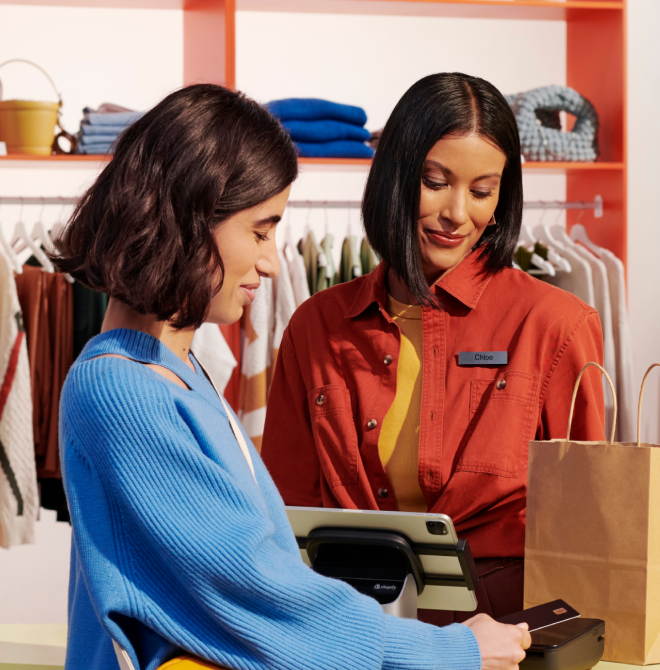
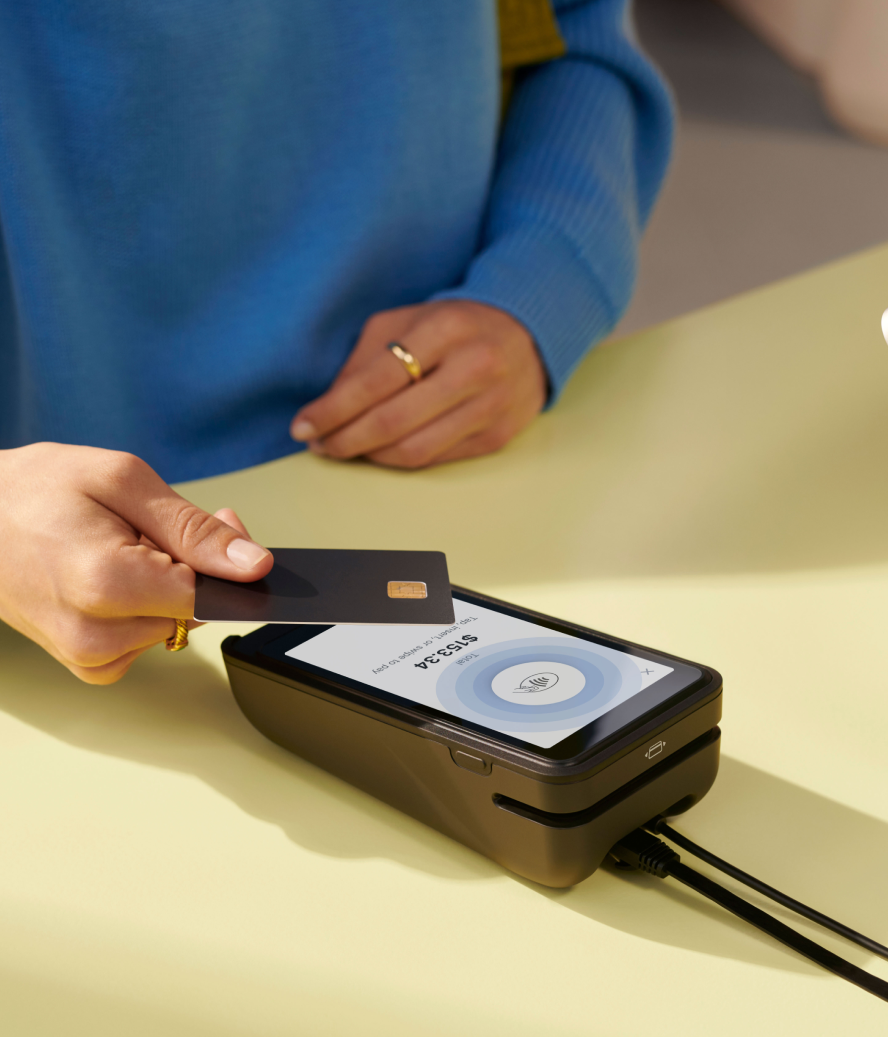
Shopify POS creates a cart for each customer and lets staff accept payment with a range of payment methods, all while syncing orders and inventory across every retail location, the online store, and other active sales channels. That connection keeps stock counts and order history identical whether a shopper is browsing the website or standing in the store.
Your retail brand identity impacts your store’s layout and lighting, but your design also has to support webrooming behaviors. Make it easy for customers to find what they saw online and get help the moment they need it.
If someone walks in saying, “I saw this online,” your team needs to be able to bridge the handoff instantly. They need to be able to confirm details, locate inventory, and complete the sale without sending the customer back to their phone.
Verizon’s 2025 Connected Retail Experience Study highlights retailers’ growing focus on associate mobile tools such as mobile inventory apps and mobile access to customer data to improve service and responsiveness through 2026.
To connect online research to in-store conversion, enable store associates with:
- Customer context. Give staff access to order history and loyalty status so customers don’t have to repeat themselves. Jo Hooper, founder of NRBY Clothing, says. “You can identify a customer, look at their shopping habits without feeling intrusive and say, ‘I can help you with this because I can see what you’ve bought in the past.’”
- Mobile tools. Enable on-the-spot inventory lookups and the ability to place shipping orders from the aisle.
- Line-busting checkout. Use mobile POS tools to let staff complete transactions anywhere, reducing long wait times.
- Real-time inventory. Make sure when your website says an item is in stock, it’s on the shelf when the customer arrives.
Allbirds, for example, uses Shopify POS in its stores to keep customer information unified and deliver a seamless experience across channels, and it rolled out Ship from Store so store teams can fulfill orders more flexibly when the right size or color isn’t on the shelf.
These guidelines ring true for pop-up shops, too. Just because a location is temporary doesn’t mean it’s separate from the customer experience. Treat pop-ups as a full omnichannel touchpoint. Align visual identity and policies with your other channels, and equip staff with the same mobile tools and customer context so the online and offline customer experience feels continuous.
Mobile
Customers use their phones to research, compare, and even purchase while they’re physically in a store. In Salsify’s 2025 Consumer Research report, 67% of shoppers said they webroom (research online, buy in-store), and 30% said they’ve purchased on their smartphone while standing inside a physical store.
If that experience falls short, you lose them. Focus on the following areas:
- Your mobile site. Mobile stores should be fast and easy to skim price, specs, and availability. Use one-tap pay so customers don’t have to dig for a credit card.
- Local search and Maps. Align your Google Business profile with your retail operations. If your “In Stock” status or “Open Until 9 PM” listing is wrong, you’ve broken their trust before they even walk in.
- Email on mobile. Most people check email while doing something else. Keep your subject lines punchy and your buttons big enough to tap with a thumb.
- Social shopping. If someone clicks a product on Instagram, they expect to land exactly on that product page. Make sure the transition from scrolling to buying feels like one fluid motion, with clear pricing and shipping info right upfront.
- Chat and support. Don’t make customers repeat their order number. Whether they start a chat on their phone or walk into the store later, your team should see the same history. Continuity makes customers feel seen.
- In-store QR codes. Let customers scan a tag to read reviews, watch a setup video, or check for other sizes. It adds an omnichannel element to the physical aisle.
- Mobile wallet and loyalty. Put loyalty cards and rewards directly into Apple or Google Wallet. It makes earning points effortless, whether they are clicking buy or standing at your register.
If your online store runs on Shopify, a mobile-friendly website comes as standard. All Shopify Theme Store options are mobile-ready with responsive images and mobile performance testing. When customers buy on their phone, Shop Pay’s one-tap checkout makes it easy to complete the purchase.
Online marketplaces
Online retailers have less control over the customer experience on marketplaces like Amazon or eBay, but these customer interactions aren’t to be overlooked. When considering the cohesiveness of all channels, these marketplaces still represent an extension of your brand.
DHL’s 2025 E-Commerce Trends research found that 98% of global shoppers buy from marketplaces. So, even if you don’t own the platform, you still need to own how your brand shows up on it.
Here are some ways you can remain cohesive on these third-party sales channels:
- Language. Again, ensuring the language you use matches your brand identity and brand voice, even on these third-party marketplaces, can reinforce the total customer experience with your brand. This includes product descriptions, one-on-one interactions with customers, and your seller page.
- Visuals. Are your products represented in a way that underscores your customer experience? Many marketplaces may require a white background photo for the featured image, but you can supplement it with additional angles, contextual photos, or funky backgrounds—if they match the customer experience you’re trying to create.
- Customer support. Customer support via these selling channels is huge. Take a look at customer reviews on Amazon, and you’ll likely see at least a few comments on the customer service. These impressions go a long way and make a big impact on the customer experience. Remember to be consistent in your voice and to treat these customers as you would any other.
Expanding to third-party platforms? Learn the pros and cons of selling on Amazon and eBay, or find out if selling on Etsy is worth it for your brand. If you’re already on Etsy, see how to integrate Etsy with your Shopify store for a unified view of your business across channels.
Customer service
Speaking of customer service, it’s important to treat support as a core customer-facing channel, and an omnichannel one. Customers will interact with your team over phone, email, live chat, and social, and they expect the experience to feel consistent and connected every time.
Cross-channel continuity matters as much as tone. In Zendesk’s CX Trends 2026 research, 81% of consumers want representatives to pick up where they left off, and 74% get frustrated when they have to repeat information.
Give your team a simple guide covering your voice, showing empathy, and handling the tricky stuff. You can even set up pre-written responses for common questions to help them move faster, as long as they have the freedom to tweak the wording so it still sounds like a real person.
Your customer service team must also be timely across every channel. Zendesk reports 88% of customers expect faster response times than they did just a year ago, and 74% now expect customer service to be available 24/7 due to AI-enabled service norms.
Shopify takes it a step further with Shopify Inbox. With Shopify’s AI assistant Sidekick, Inbox can automatically generate suggested replies during customer conversations. Agents can review, edit, and send faster, and you can also publish Instant Answers that show up in chat as clickable FAQs. That way, customers get answers immediately without waiting for a human response.
Social media
Social media is often the first place people meet your brand. It’s no longer just a place for digital ads, it’s where people discover products, make up their minds, and ask for help.
Horowitz Research found in 2025 that half of all consumers now use social as their primary way to find new brands, and nearly as many have bought something directly through a social app in the last month.
But people also expect answers fast on social media, and they aren’t very forgiving if they’re ignored. According to the 2025 Sprout Social Index Edition XX, 73% of users will head to a competitor if a brand doesn’t respond to them on social media.
A few ways to turn those digital likes into real-world relationships are:
- Turn digital followers into foot traffic. Use your posts to talk about what’s happening in person at events like pop-ups, workshops, or VIP nights. It’s the easiest way to encourage a visit because you’re giving a warm audience a reason to stop scrolling and walk through your doors.
- Keep the path to purchase flexible. When you drop a new product, give people options. Tease it on social, but let them choose whether to buy it online, reserve it for a local pickup, or come see it in-store that day.
- Close the loop with real-life content. Encourage your customers to share their own photos and unboxing videos. User-generated content (UGC) builds trust with shoppers because they believe other customers far more than they believe your marketing department.
- Support the store experience in DMs. If someone has a question about a return or pickup, they might message you on Instagram or TikTok. Treat these messages as you would any other customer service channel.
- Give them a reason to act now. Share store-specific arrivals or local offers that feel timely. It gives people a concrete reason to stop scrolling and start shopping, whether that’s online or in person.
At the end of the day, your look and feel shouldn’t change just because the app does. While your tone might be a little more casual on TikTok than it is on your website, your core values and service standards have to stay the same. You want a customer to move from your social feed to your physical store and feel like they’re talking to the exact same brand every step of the way.
In-person selling events
Selling in person, whether at a market, festival, or pop-up, creates a human connection that a screen can’t match. It’s the ultimate shortcut to building the kind of trust that turns a stranger into a loyal fan.
Freeman’s 2025 Trust Report backs this up, citing that 95% of people trust a brand more after meeting it in real life. Myriam Belzile-Maguire, co-founder of footwear brand Maguire, noticed this shift during Maguire’s early growth.
“When we were doing pop-ups and in-person events, we realized we were making sales for the month after because we would meet people in person,” Myriam says. “People would try the product ... once they know they like the brand and they like their quality, then they feel more comfortable buying online.”
Use the following tips to improve your in-person sales experience:
- Bring your brand to life. Use the same signage, packaging, and vibe that customers see on your website so they recognize you instantly.
- Speak the same language. Ensure your staff is trained on your brand story and values. Whether customers are asking about sizing or materials, the conversation should feel like a natural extension of your online voice.
- Stay consistent with a cheat sheet. Give your team quick scripts for common questions. When service is confident and consistent, it reinforces the professional trust needed to shop with you again later.
- Connect with customers even after an in-person experience. Grab an email for a future promo or set up a unified customer profile to remember their style. Following up with a simple nice-to-meet-you email keeps you in a customer’s mind long after the event ends.
📚Read more: Learn how to create a great offline event sales experience with these market booth ideas.
Whether you use email to send sales and promotions, email newsletters, customer support interactions, order updates, receipts, or more, every email matters.
Marketing newsletters get all the creative love, but your transactional emails like confirmations, tracking updates, and receipts, are crucial for reassuring customers after they’ve completed a purchase. A Forrester survey found in 2025 that 80% of shoppers consider a clear delivery or pickup date the most important part of the purchase process.
These emails have high open rates, so they’re great opportunities to build trust. You don’t need to turn a receipt into a sales pitch, but you should make it helpful. Use that space to share care instructions, return policies, or a link to book an in-store setup. Omnisend’s 2025 Ecommerce Marketing Report found automated, triggered emails earned $2.87 each, nearly 16 times more than standard marketing blasts.
Keep these messages consistent with the rest of your brand by using Shopify Messaging. Create and manage email and SMS campaigns right in your Shopify admin. The same store data and customer context can influence your follow-up messages, making them more personal and more likely to convert.
Putting the pieces together
While focusing on one channel at a time helps you spot gaps, cohesion happens when you design everything as one connected system. Your channels shouldn’t be competing for attention, they should be handing off the customer to the next step.
It’s best to start small. Focus on one channel that suits your product and do it well. Master one baseline, learn what works, and then scale that experience across other touchpoints.
Once you have your foundation, pressure-test how your channels actually talk to each other by walking through these common scenarios:
- Buying online and picking up in-store (BOPIS). More people are choosing alternative fulfillment methods to save time. According to Sensormatic Solutions’ 2025 survey, interest in store pickup (46%) now officially outpaces home delivery (38%). If a customer chooses this method, is the handoff fast? Are the instructions clear?
- Handling returns everywhere. Returns are a huge part of the experience. Since 82% of shoppers check for free and easy returns before they even buy, make sure your policies are consistent whether they come back to the store or mail a package.
Take Parachute, a home goods brand with both ecommerce and retail. After unifying its channels on Shopify, Parachute reported 1,300 BOPIS orders in Q4 2024, accounting for 35% of its annual BOPIS volume. Just as important, unified customer profiles give store associates the context to answer customer questions on the spot, so the experience feels like one brand, not separate retail and digital teams.
Measuring omnichannel success
Measuring omnichannel success is tough if you look only at each channel in a vacuum. To know if your strategy is working, track how easily customers move between the two and if the experience makes them stick around.
Here are the five main areas to measure:
- Total sales lift. Are your total sales growing, or are your store and website just stealing customers from each other? You want to see your store sales go up without your online sales dropping. Use Shopify’s sales reports to compare your website to your physical registers (POS). If both are healthy, your omnichannel strategy is working.
- Mobile shopping performance. Track how your mobile site performs for customers shopping in your aisles. Check Shopify’s behavior reports to find where people drop off in the checkout funnel. If shoppers add items to a cart on their phones but don’t finish the purchase, your mobile experience likely needs a speed or navigation fix.
- Customer retention. Measure how many people come back for a second or third purchase. Use Shopify’s cohort analysis to group customers by their first order date. High repeat purchase rates suggest your experience feels consistent and reliable across all touchpoints.
- In-store operations. Audit your store-level data to see if your team and tools are hitting the mark. Review POS analytics for net sales, average order value (AOV), and items per order.
- Multi-channel marketing ROI. Identify which emails, social ads, or searches are driving revenue. Use Shopify’s marketing reports to see the full journey, from the first interaction that introduced them to your store to the last click before they bought.
Online and offline customer experience FAQ
What is a cohesive experience?
A cohesive experience is a consistent, connected experience across channels (for example: mobile, web, social, and in-store) so customers can move between touchpoints without repeating steps or re-entering information.
What are the elements of a powerful customer experience?
- Engagement. Meaningful interactions that match the customer’s intent (e.g., shopping, support, returns).
- Clarity. Clear product info, pricing, shipping timelines, and policies.
- Personalization. Relevant recommendations and service informed by customer context (with consent).
- Consistency. The same brand voice, visuals, and rules across channels.
- Empathy. Support that acknowledges customer needs and reduces friction.
- Feedback. Easy ways to share feedback—and visible follow-through.
- Convenience. Flexible payment, delivery, pickup, and return options.
What is the difference between online and offline customers?
They’re often the same customer using different channels. “Online” and “offline” describe where the interaction happens (web/app versus in-person), not separate customer types—so your experience should stay consistent across both types of touchpoints.
What is omnichannel vs. multichannel?
Multichannel means you sell on different platforms (like a website and a physical store), but they often operate as separate silos with their own data and inventory.
Omnichannel connects those silos into one seamless system. It ensures that whether a customer is browsing on their phone, chatting with support, or standing in your aisle, the brand experience, inventory, and customer data are all unified and consistent.
How can retailers measure omnichannel success?
Success is measured by tracking how easily customers move between touchpoints rather than looking at channel sales in isolation.
Start with a few core metrics, such as cross-channel conversion, repeat-purchase rate, and customer lifetime value, to establish a baseline for loyalty. Once those are stable, add operational KPIs such as return patterns and pickup reliability to ensure every handoff in the journey is frictionless.

